

North American
Chinatown Solidarity Conference
By: Welcome to Chinatown
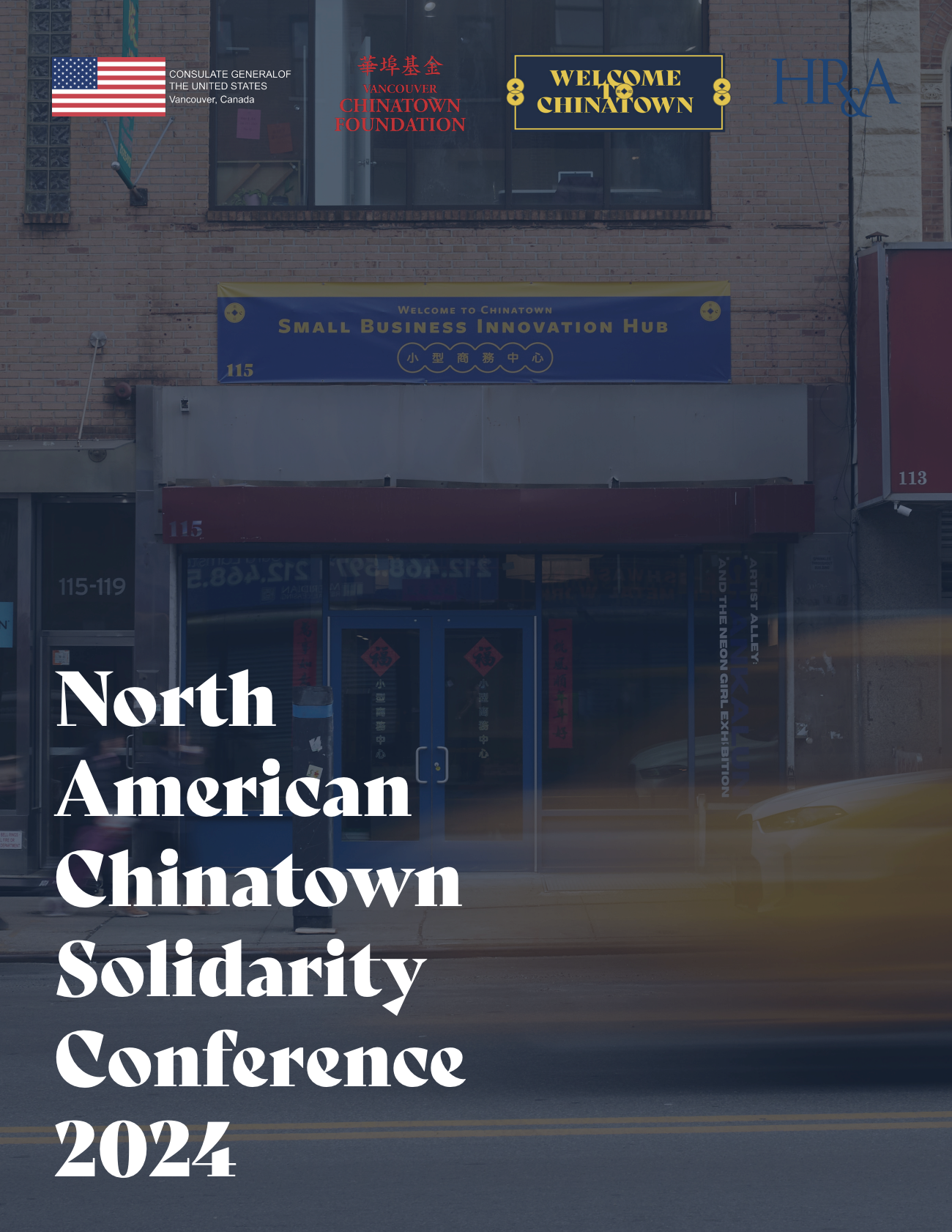
In October 2024, Welcome to Chinatown hosted the second US-Canada Chinatown Solidarity Summit at our newly opened Small Business Innovation Hub
Chinatowns hold immense significance in North American history and culture.
They represent some of the oldest remaining immigrant enclave communities and are still home to hundreds of thousands of residents, workers, mom-and-pop businesses, and legacy institutions. Together, they symbolize the resiliency, adaptability, and strength of the Asian community and serve as cultural beacons that connect us to our past. They also continue to serve as safe havens for generations of new immigrants looking for belonging and new economic opportunities.
But many Chinatowns are at risk of disappearing today. A multitude of threats – rising rents, displacement, inequitable planning processes, large-scale megaprojects, anti-Asian hate, and others – endanger the future of these neighborhoods as vibrant hubs of Asian Canadian and Asian American culture and life.
In October 2024, Welcome to Chinatown hosted the second US-Canada Chinatown Solidarity Summit at our newly opened Small Business Innovation Hub.
The Summit brought together over 40 leaders representing 21 Chinatowns over the course of two days, including: Alberta, Atlanta, Calgary, Chicago, Denver, Edmonton, Honolulu, Las Vegas, Los Angeles, Montreal, New York City, Oakland, Ottawa, Philadelphia, San Francisco, Seattle, Toronto, Vancouver, Victoria, Washington D.C., and Winnipeg.
U.S. – Canada Chinatown Solidarity Conference
The summit built upon the three key pillars established at the first convening:
Historic and Cultural Preservation: How can Chinatowns remain authentic to their historic and cultural heritage while remaining competitive in the 21 st century?
Public Safety: How can Chinatowns address public safety challenges without exacerbating problems like over-policing and police brutality?
Economic Revitalization: How can Chinatowns become more economically competitive in the face of challenges like declining foot traffic and rising costs?